A summons app should do more than display a long list of codes. For an officer, the real value is finding the right provision quickly, understanding why it may apply, and keeping that reference connected to the rest of the court workflow.
Whether you are a recruit learning common provisions or a working officer preparing for traffic court, these are the features that make a summons app useful in the field.
Jurisdiction-aware violation-code search
Violation numbers and descriptions are not universal. The same phrase can lead to different statutes, rules, or summons types depending on the state or local authority.
A dependable summons app should let the user select the correct jurisdiction and then search within that context. It should not present an unfiltered nationwide list that makes unrelated results look equivalent.
Search by code and plain language
Officers do not always begin with a perfectly formatted statute number. Sometimes the starting point is a phrase such as “red light,” “unlicensed operation,” or another description of observed conduct.
Useful search should recognize code numbers, descriptions, abbreviations, common wording, and formatting differences. Filters should help narrow the results without making the officer complete a complicated form before every search.
Clear result cards
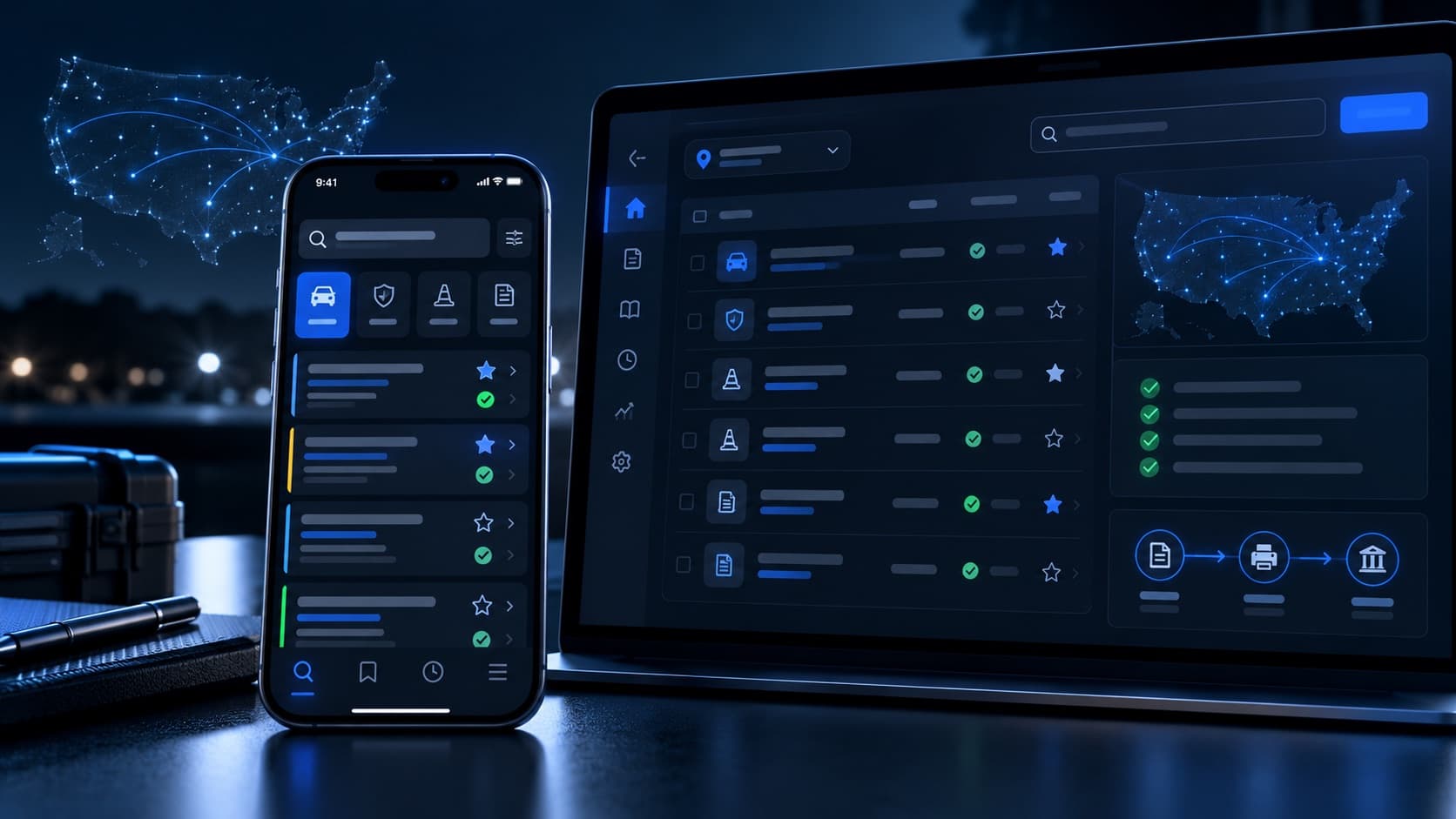
A result should be understandable at a glance. The most useful fields may include:
• Violation or statute number
• Law or rule family
• Full subsection
• Plain-language title
• Summons or violation type
• Jurisdiction
• Classification or related information when verified
• Source and review information
The interface should show the most important information first and make the detailed description available without forcing the user through unnecessary screens.
Summons types that match the jurisdiction
Some locations use multiple summons, citation, or adjudication systems. An app designed for officers should identify those distinctions clearly instead of grouping every result into a generic category.
In New York, for example, officers may work with different summons types and rule families. Elsewhere, state and municipal systems have their own structures. Nationwide coverage should preserve those differences rather than erase them.
Reliable sources and current information
A search result is only a starting point. Laws, fine schedules, classifications, points, and local rules can change.
A professional summons app should make its jurisdiction and source context clear. When an official source is available, the officer should be able to verify the current provision and effective date before relying on it for enforcement or court preparation.
Fast favorites and recent searches
Officers often return to the same provisions. Favorites, recent searches, and practical categories reduce repeated work while keeping the full search available for less common situations.
These shortcuts should be personal to the user and easy to manage. They should never hide the jurisdiction or make a saved result appear current when it has not been reviewed recently.
More than a code list
The strongest officer software connects a confirmed violation reference to the tasks that follow:
• Organizing saved summons information
• Preparing and reviewing a testimony draft based on officer-supplied information
• Grouping work by court date
• Exporting or editing material before court
• Tracking overtime and related records
That connection matters because the officer’s work does not end when a code is found.
Web access and iPhone access
Officers work in different settings and on different devices. A modern summons app should be easy to use on a phone in the field and on a larger screen when organizing court preparation.
NinetySix is available directly through the web application and through the iPhone app. The same platform supports Violation Codes / Summonses, testimony-draft preparation, saved summons information, traffic-court organization, and overtime tracking.
A simple test before choosing a summons app
Ask these questions:
1. Does it search within the correct jurisdiction?
2. Can it find results by both code and plain language?
3. Does it clearly identify the law, subsection, and summons type?
4. Does it show source or verification context?
5. Is the interface fast enough to use without training?
6. Can useful references stay connected to court preparation?
7. Can officers use it on the web as well as on iPhone?
8. Does it avoid claiming official agency affiliation when none exists?
9. Does it protect private account and workflow information?
10. Does it remind the officer to verify current law and department policy?
How NinetySix approaches summons search
NinetySix Violation Codes / Summonses is designed around jurisdiction-first searching. Officers can look up codes and descriptions, narrow results, review the available details, and continue into the same platform used for traffic-court preparation.
NinetySix does not replace official statutes, department policy, legal guidance, or an officer’s judgment. It is built to make the research and organization process faster, clearer, and easier to revisit.
For officers nationwide
A nationwide summons app should respect local differences while giving every user a consistent experience. That means accurate labels, clear filters, useful source context, and an interface that works just as well for a recruit learning the system as it does for an experienced officer preparing multiple cases.
Use NinetySix Online or the NinetySix iPhone app to explore Violation Codes / Summonses and keep code research connected to the rest of your traffic-court workflow.
Explore NinetySix Violation Codes / Summonses · Compare subscription options · Use NinetySix Online · Get the iPhone app