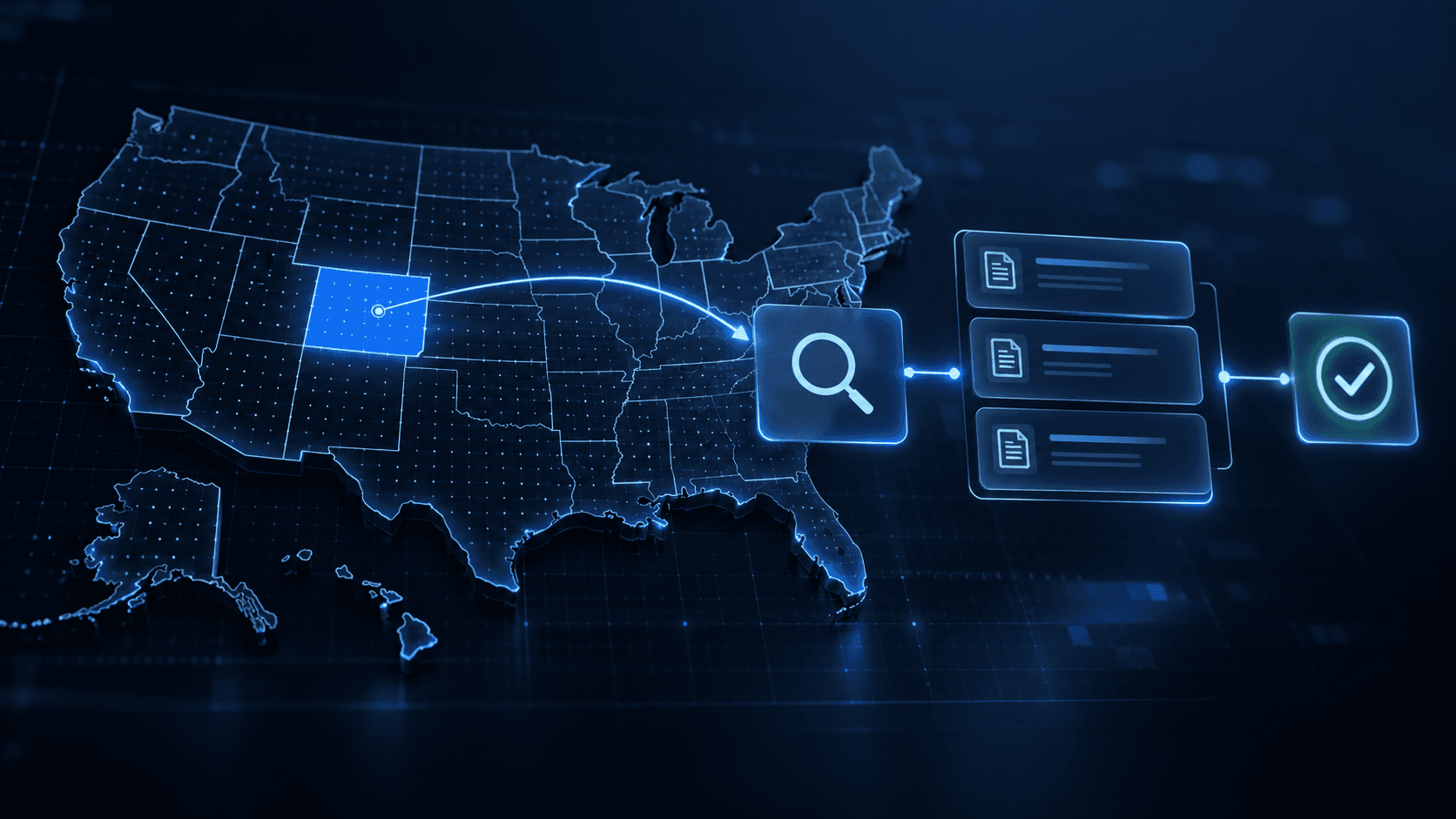
A violation code is only useful when it is connected to the correct jurisdiction, law, subsection, and summons type. The same number or phrase can mean something different in another state, county, city, or enforcement system.
That is why reliable violation-code research should begin with jurisdiction—not with a nationwide list presented without context.
This guide explains a practical process officers and recruits can use to search and verify traffic and summons codes more confidently. Department policy, current law, and official sources always control.
Start with the correct jurisdiction
Before searching, confirm where the enforcement action occurred and which authority issued the summons. Select the applicable state first, then narrow the search when local rules or separate adjudication systems apply.
A phrase such as “red light,” “public urination,” or “unlicensed operation” may produce several possible results. The correct result depends on the location, enforcement authority, and conduct documented by the officer.
Search by more than one field
A useful lookup system should support several ways to find a violation: code or statute number, plain-language description, law or rule family, state or jurisdiction, summons or violation type, and common enforcement keywords.
Searching by both code and description helps when the written format differs from the official statute format. Punctuation, parentheses, spaces, or abbreviations may vary even when the underlying provision is the same.
Confirm the law and subsection
A statute number without its subsection can point to an incomplete or incorrect rule. Compare the complete code, law name, subsection, and description.
If two results appear similar, review the conduct described in each provision. Do not select a code solely because its title sounds familiar.
Understand the summons type
Some jurisdictions use more than one summons or adjudication system. New York, for example, can involve traffic-law provisions and locally administered summons categories. Other states and municipalities have their own citation structures.
NinetySix Violation Codes / Summonses is designed to organize results by jurisdiction and type so officers can distinguish among available references instead of searching one unfiltered national list.
Review classifications and penalty information carefully
A reference may include a classification, fine or penalty range, points, hearing information, or other consequences. Treat those fields as time-sensitive.
Penalty amounts can depend on amendments, local schedules, prior history, administrative rules, or the court handling the matter. When the amount must be written on a summons, verify it against the current official source or department guidance.
Check the effective date
Laws and schedules change. A current webpage may not describe the law as it existed on the enforcement date.
When timing matters, check the amendment history or effective date and confirm that the version being reviewed applies to the incident. NinetySix can make searching faster, but it should not replace required legal or departmental verification.
Use authoritative sources for final confirmation
A practical verification sequence is:
1. Select the correct jurisdiction.
2. Search by the full code or descriptive keywords.
3. Compare the title, law family, and subsection.
4. Review the conduct described by the provision.
5. Confirm the current official source and effective date.
6. Verify any required penalty or classification information.
7. Follow department policy before issuing or preparing the summons.
Save the reference with the related workflow
Code research is most useful when it stays connected to the officer’s actual court preparation. After confirming the provision, organize the summons information and any testimony draft under the correct court date.
NinetySix combines Violation Codes / Summonses with testimony-draft preparation, saved summons information, court-date organization, and overtime tracking. Officers can use it online or through the iPhone app.
Nationwide research with local context
Nationwide coverage is not simply one large list. It requires accurate jurisdiction labels, searchable descriptions, clear law families, useful source information, and ongoing review as laws change.
NinetySix is built to make that reference workflow faster and easier while keeping the officer in control of final verification. Results should help an officer find the right starting point—not encourage anyone to guess.
A reliable field habit
The simplest rule is: jurisdiction first, full code second, official verification last.
That habit makes code searches more dependable, reduces confusion between similar provisions, and helps officers prepare clearer summons and traffic-court records.
Use NinetySix Online or the iPhone app to search Violation Codes / Summonses and keep the reference connected to the rest of your court workflow.
Open the Violation Codes / Summonses guide · See NinetySix pricing · Use NinetySix Online · Get the iPhone app